Overview
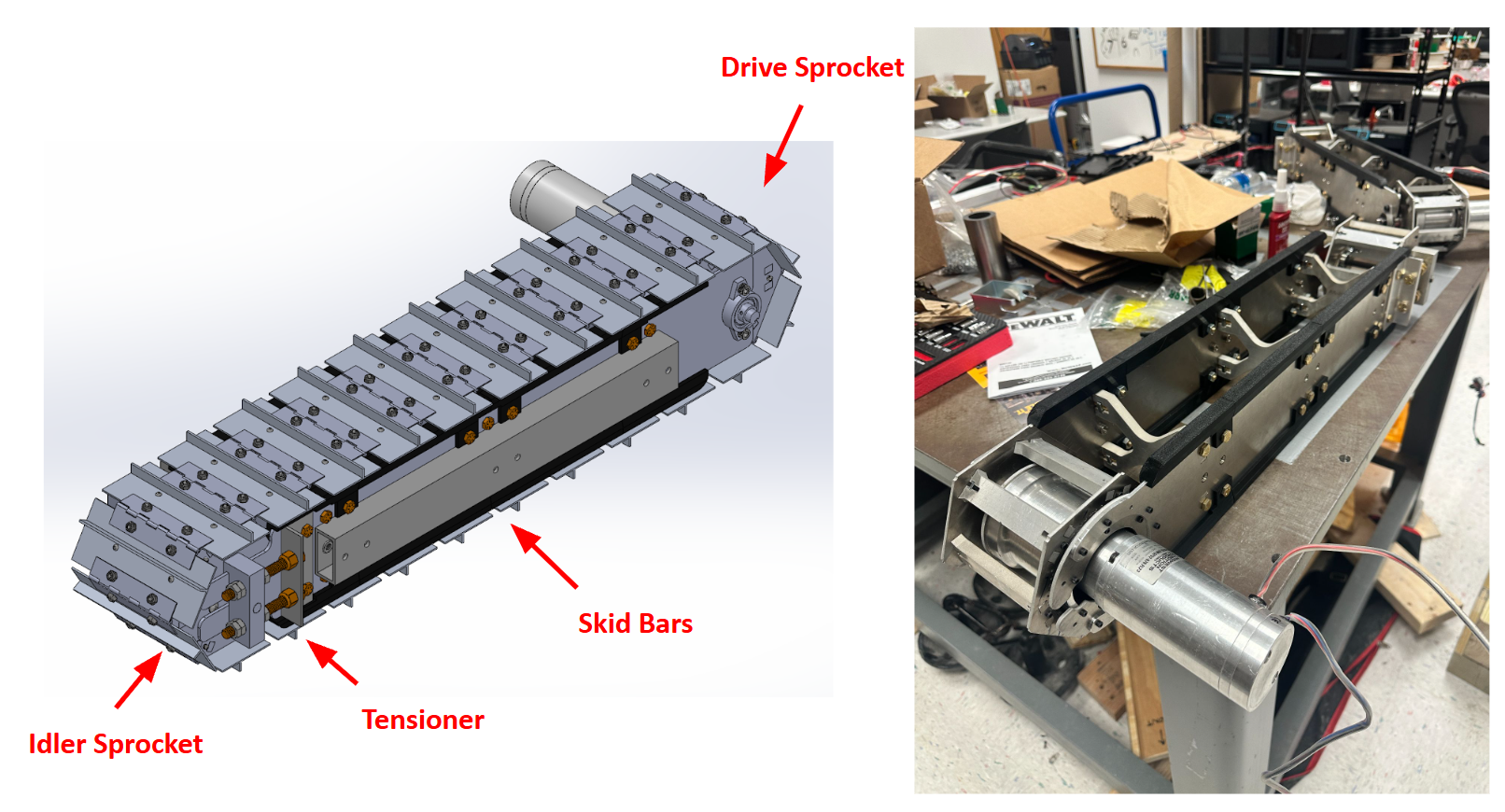
I designed, built, and tested the tracked drivetrain for CMU’s NASA Lunabotics rover. The system had to survive demanding excavation conditions while remaining reliable, easy to assemble, and straightforward to repair between tests.
Design for Manufacturing
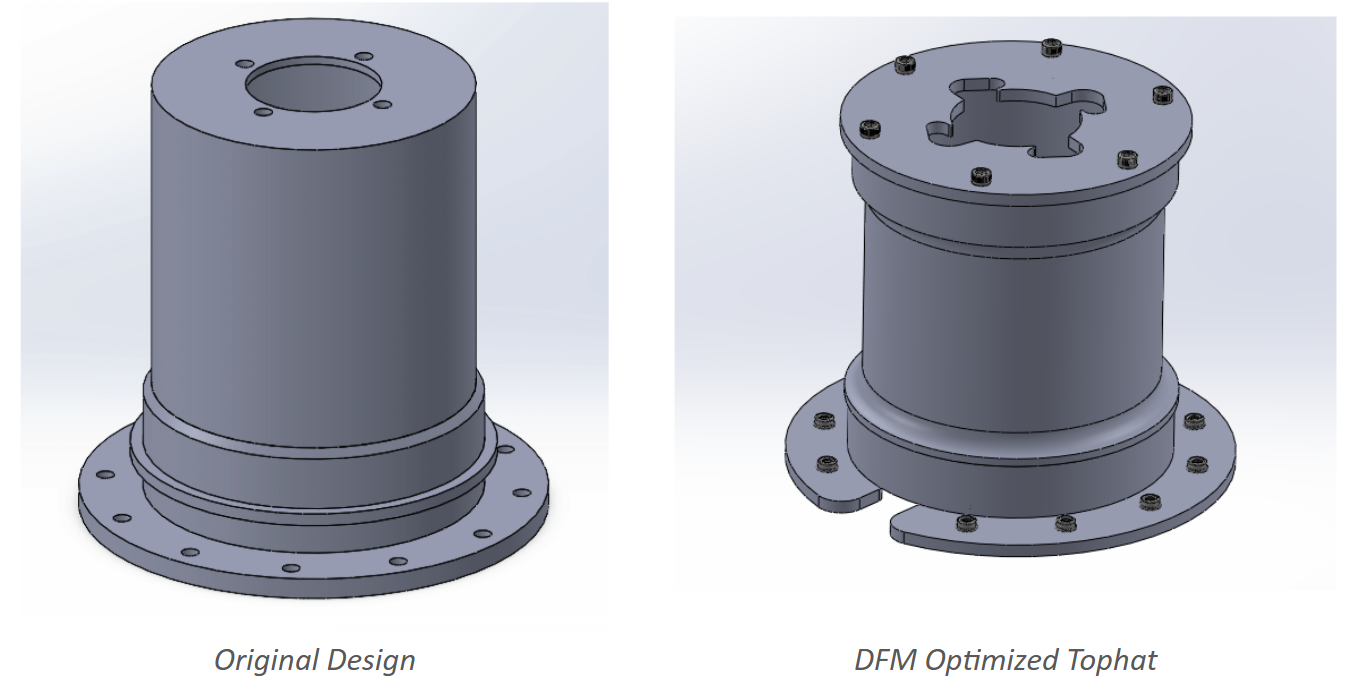
A major part of the project was simplifying components that were expensive or difficult to manufacture. I redesigned the original machined tophat into a multi-piece assembly that could be produced using more accessible manufacturing processes while maintaining the required geometry.
Modular Motor Assembly
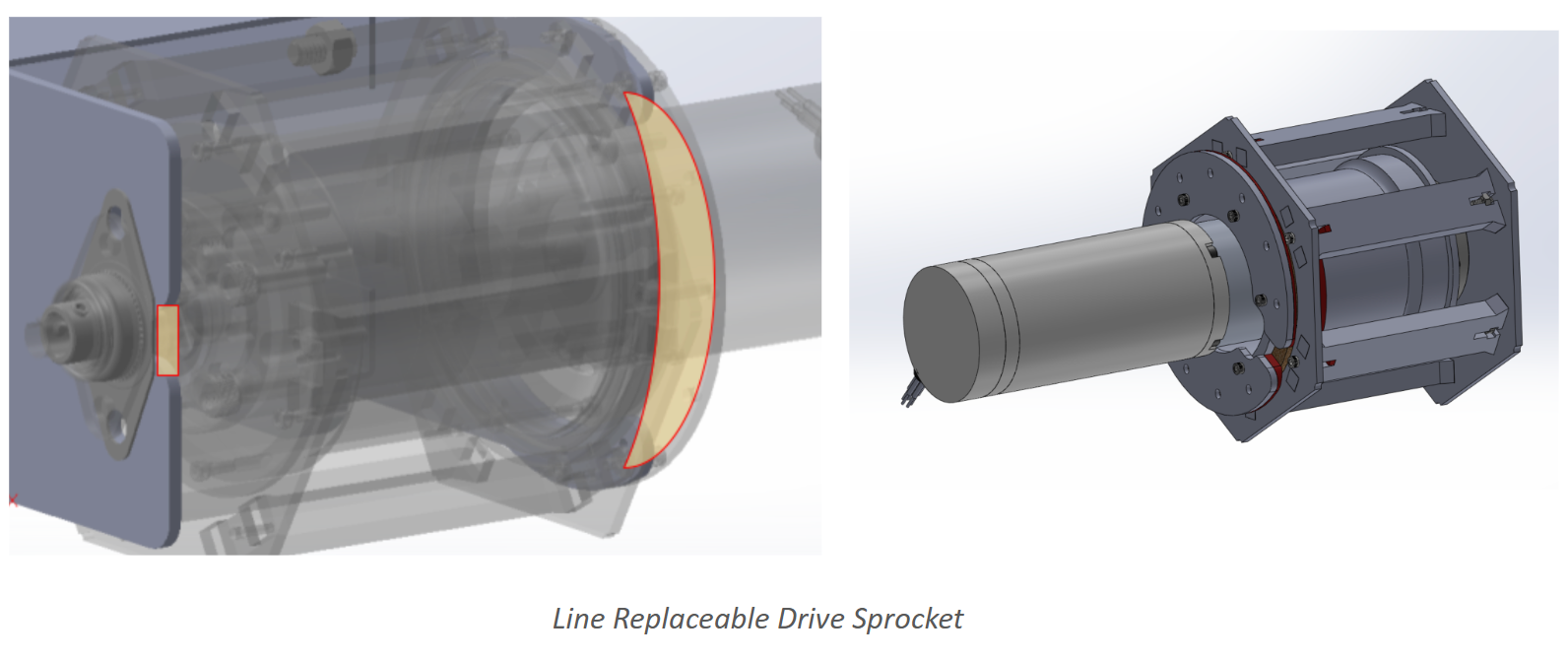
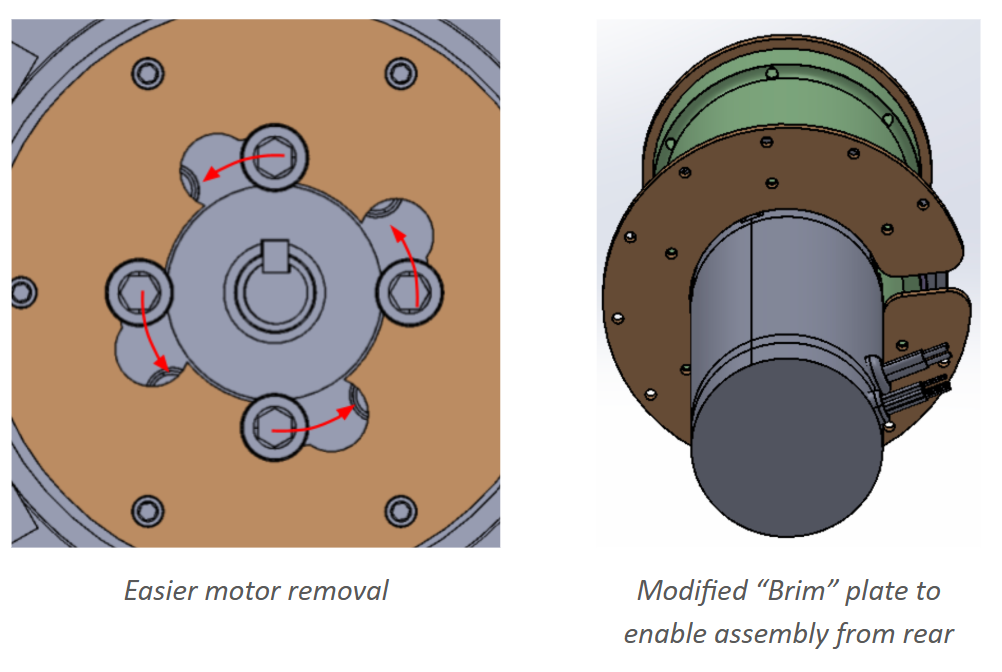
I redesigned the motor mount as a line-replaceable unit so the motor and drive sprocket could be removed without taking apart the entire drivetrain. The rear plate geometry and mounting pattern were also modified to make assembly and maintenance faster.
Sprocket Redesign
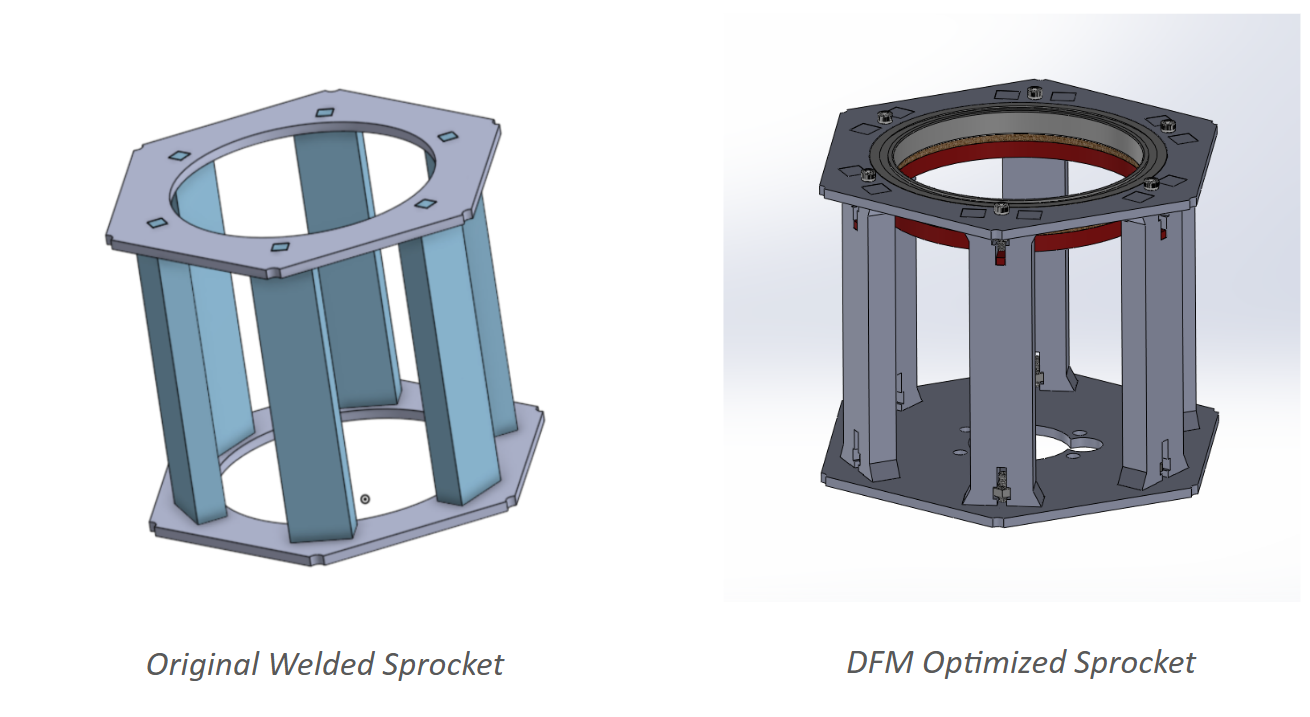
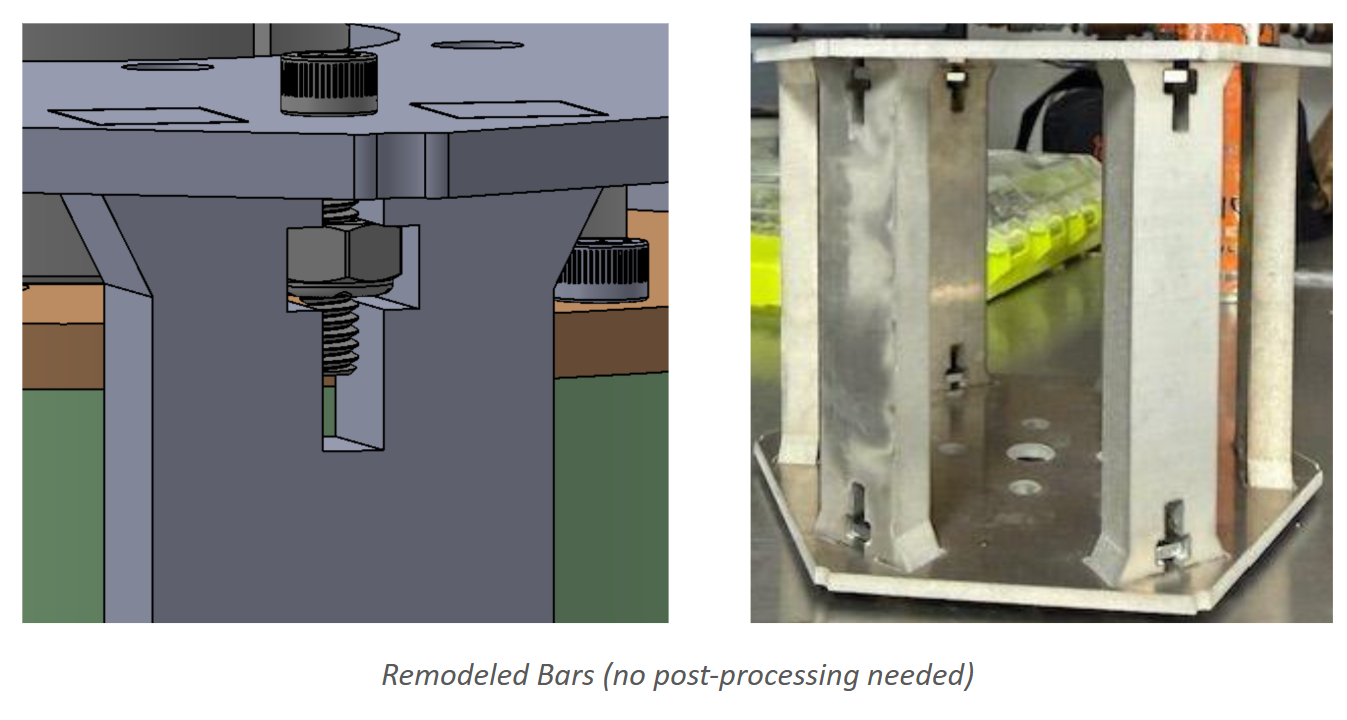
The original sprocket structure relied heavily on welded joints, which increased manufacturing time and made consistent assembly difficult. I replaced it with a slot-tab-nut design that mechanically located the parts before fastening, reducing the amount of welding and machining required.
Prototyping and Testing
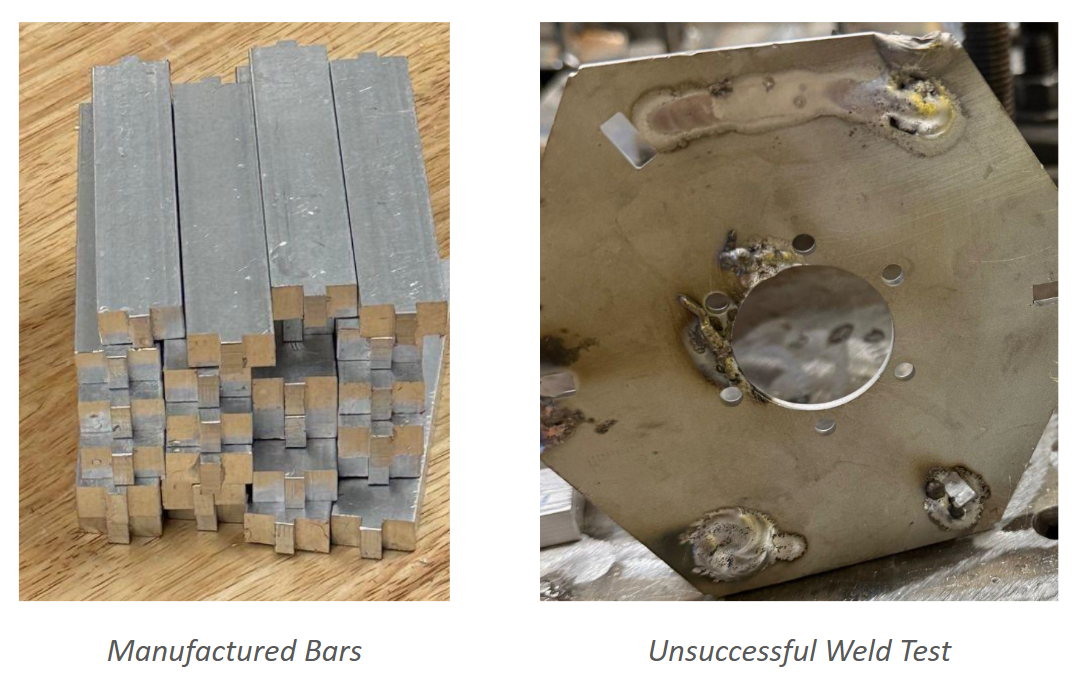
Early fabrication tests exposed issues with weld quality, alignment, and post-processing. I used those results to revise the bar geometry and fastening strategy, allowing the parts to locate themselves during assembly and reducing the amount of manual finishing required.
Results
The redesign reduced manufacturing cost by roughly $3,000 while improving assembly speed, repeatability, and serviceability. Continued physical testing also helped increase drivetrain reliability under realistic excavation conditions.